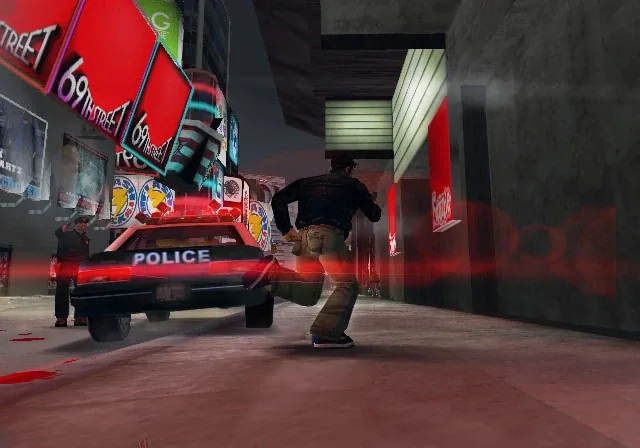
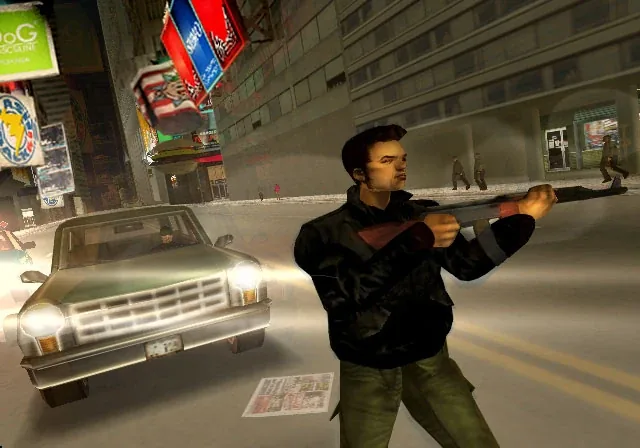
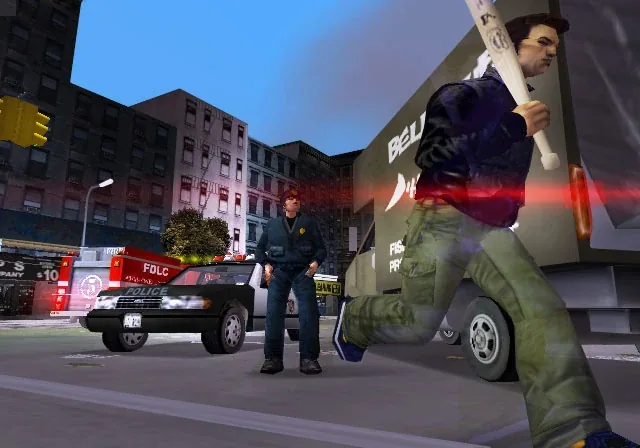
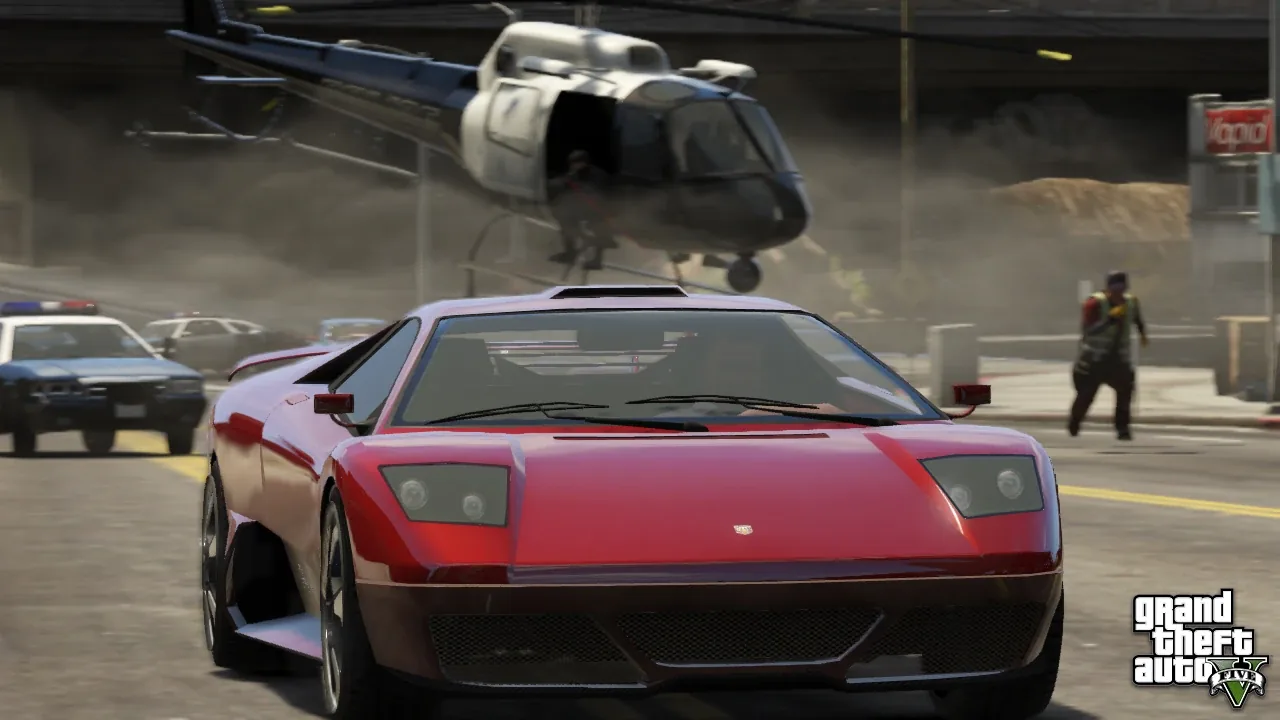
Released October 22, 2001, Grand Theft Auto III is the game that defined the modern open-world genre. Its story is, by 2026 standards, surprisingly lean — most missions are wordless setups for action sequences, and the silent protagonist Claude is the camera through which Liberty City unfolds. But the plot is structurally tight, and twenty-five years on the betrayal arc still works.
Below: the full story primer. Spoilers throughout.
The opening
Grand Theft Auto III opens on Callahan Bridge in Liberty City. Claude (silent, unnamed in-game until San Andreas's retroactive naming) is in the back of an armored car after a bank robbery alongside his girlfriend Catalina and a third accomplice. Catalina double-crosses Claude — shoots him at point-blank range, leaves him for dead — and escapes with the money.
Claude survives. He's arrested, transported, escapes during a prisoner-transport ambush (the bridge collapse during the cutscene effectively isolates Portland Island), and meets 8-Ball at the bomb shop. The story proper starts here.
Act 1 — Portland Island and Salvatore Leone
The first act is largely Mafia missions for Salvatore Leone, the don of the Leone family. Claude works his way up through Luigi Goterelli (running club errands), Joey Leone (Salvatore's son, mechanic and chop-shop operator), and Toni Cipriani (Salvatore's enforcer in Saint Mark's). By the end of the first act, Claude is a trusted Leone soldier.
The act ends with Salvatore Leone betraying Claude — Salvatore tries to have Claude killed at the docks. The betrayal is the second of three that drive the story.
Act 2 — Staunton Island and the Yakuza
Claude crosses to Staunton Island (the bridge opens during the Salvatore betrayal mission). He's recruited by Asuka Kasen, the Yakuza co-leader, and her partner Kenji Kasen. The second act runs Yakuza missions against the Leones, plus side work for Donald Love, Ray Machowski (a corrupt cop), and the Cartel-adjacent Maria Latore (Salvatore's wife, who also turns on Salvatore mid-act).
The second act introduces Catalina as the active antagonist — she's running drugs through the city for the Colombian Cartel, and several mid-act missions involve disrupting her supply chain. Catalina kills Asuka and Maria toward the end of the second act, kidnapping Maria for leverage.
Act 3 — Shoreside Vale and the finale
Shoreside Vale opens. Donald Love's missions move here. The campaign closes with the Cartel's mountain hideout sequence at Cochrane Dam, where Catalina is holding Maria hostage. Claude takes the dam, kills Catalina, and (in the game's final cutscene) appears to kill Maria too — though Maria's death is left ambiguous, and the cutscene ends with a single off-screen gunshot.
The campaign closes with Claude alive, the Cartel destroyed, and Liberty City's gang balance fundamentally restructured.
The gang chart
GTA III's faction landscape:
| Gang | Territory | Color | Lead character |
|---|
| Leone Mafia | Saint Mark's (Portland) | suits, no specific color | Salvatore Leone |
| Yakuza | Staunton Island | white shirts, black suits | Asuka & Kenji Kasen |
| Triad (Sindacco) | Chinatown (Portland) | red | unnamed |
| Cartel (Colombian) | Shoreside Vale + scattered | yellow Cartel Cruisers | Catalina |
| Yardies | Newport (Staunton) | rasta colors | King Courtney |
| Diablos | Hepburn Heights (Portland) | red bandanas | El Burro |
| Hoods | Wichita Gardens (Shoreside) | grey | unnamed |
For the per-gang breakdown, see GTA III's Gang Chart: Mafia, Triads, Yardies.
Why the silent protagonist works
Claude not speaking lets the other characters do the storytelling. Salvatore Leone, Asuka Kasen, Donald Love, Catalina — every supporting character has a distinct voice (often a celebrity casting: Frank Vincent as Salvatore, Joe Pantoliano as Luigi, Michael Madsen as Toni Cipriani). Claude's silence makes him a vector through which the city's drama plays out, rather than another voice competing for time.
This was the last time Rockstar designed a mainline GTA around a silent lead. By Vice City (2002), Tommy Vercetti had Ray Liotta. By San Andreas (2004), CJ had Young Maylay. Claude remains the only one.
What carried into the HD universe
GTA III's events are explicitly canonical in the 3D Universe (III, Vice City, San Andreas, Liberty City Stories, Vice City Stories). Catalina, Claude, and several supporting characters appear in San Andreas (set in 1992) before GTA III's 2001 events. Saint Mark's Bistro — the Liberty City restaurant CJ visits in San Andreas — is a direct reference to GTA III's territory.
The HD Universe (IV, V, Online, VI) does not treat 3D-Universe events as canonical. GTA IV's Liberty City is a separate continuity.
Should you replay it now?
If you're interested in seeing where the modern Grand Theft Auto formula started, yes. The original PC version is the gold standard if you can run it. The Definitive Edition (post-patch) is acceptable on modern hardware.
For per-mission breakdowns, see GTA III's Iconic Missions, Ranked. For the full character list, see the GTA III characters database.